Everyone who has ever made chocolate chip cookies has eaten the dough. You know this. The recipe developers know this. The people who put raw egg warnings on packaging know this too — and yet the dough kept getting eaten anyway because it tastes like the best version of a cookie that ever existed. The problem, as it turns out, isn’t just the eggs. It’s also the raw flour — which can harbor E. coli and has caused actual recalls and actual illnesses in people who ate raw dough thinking eggs were the only concern. Edible cookie dough solves both problems completely and produces something you can eat directly from the bowl, straight from the fridge, or pressed into bars — with zero food safety concerns and the full, uncompromised flavor of the best cookie dough you’ve ever had.
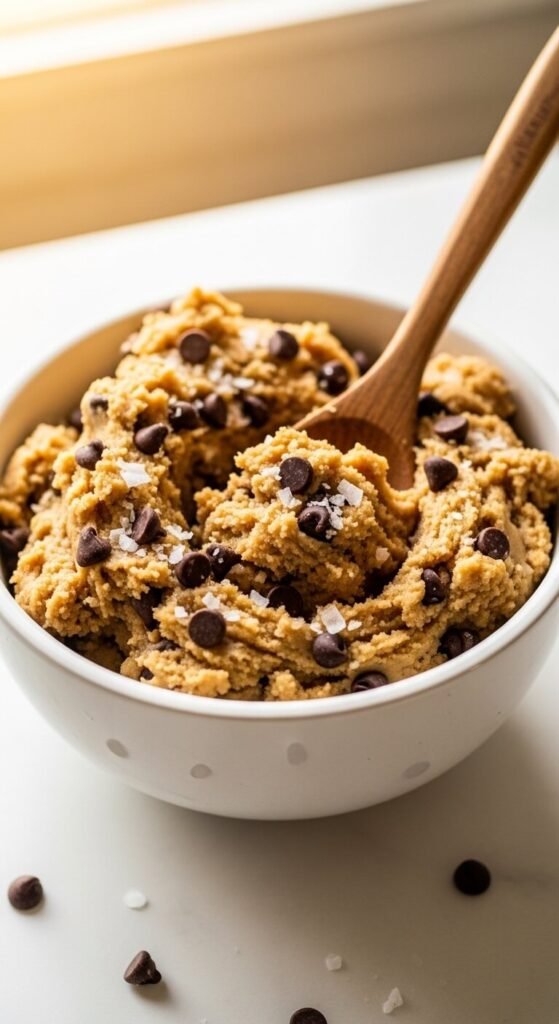
The Two Safety Steps That Make This Possible
Safe-to-eat raw cookie dough requires exactly two ingredient modifications from a standard cookie dough recipe. Everything else stays the same.
Step 1: Heat-treat the flour.
Raw all-purpose flour is the less-publicized food safety risk in cookie dough. The fix is simple and takes four minutes.
Oven method:
- Spread flour in an even layer on a rimmed baking sheet
- Bake at 350°F for 5 minutes
- Let cool completely before using — hot flour melts the butter in the dough and throws off the texture
Microwave method:
- Place flour in a microwave-safe bowl
- Microwave in 30-second intervals, stirring between each, until the flour reaches 165°F on an instant-read thermometer — usually 2 to 3 intervals
- Spread on a cool plate and let come to room temperature before using
Both methods kill any pathogens present in the flour without affecting its performance in the recipe.
Step 2: Leave out the eggs entirely.
Edible cookie dough doesn’t need eggs for structure because it’s never going to be baked. Eggs in cookie dough serve two purposes — binding and moisture. In this recipe, a small amount of milk or cream replaces the moisture, and the butter plus flour provide all the binding needed.
The Recipe
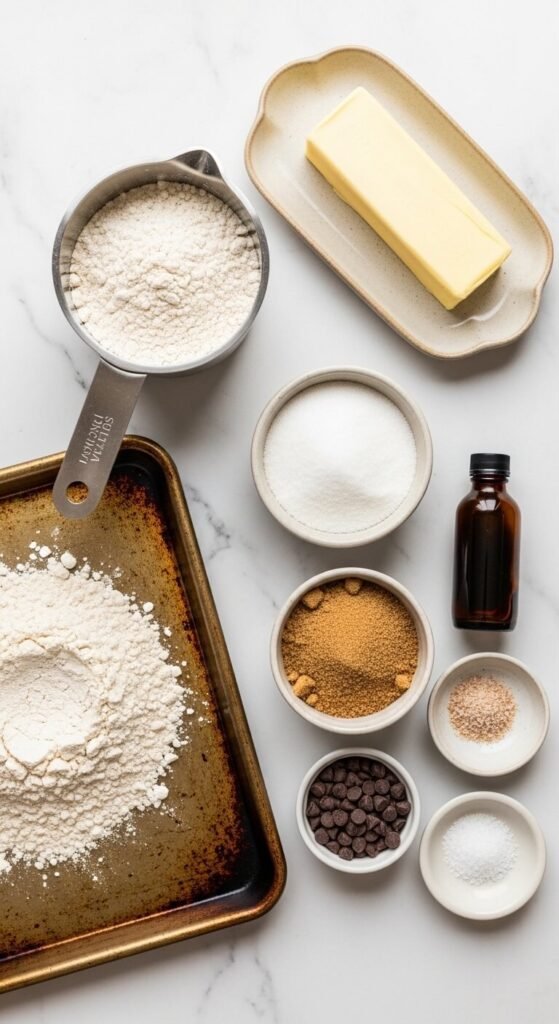
Ingredients for approximately 2 cups of edible cookie dough:
- 1 cup all-purpose flour, heat-treated and cooled
- ½ cup unsalted butter, softened to room temperature
- ½ cup packed light brown sugar
- 3 tablespoons granulated white sugar
- 2 to 3 tablespoons whole milk or heavy cream
- 1 teaspoon pure vanilla extract
- ½ teaspoon salt
- ¾ cup mini chocolate chips
Why mini chocolate chips: Standard-sized chips work but mini chips distribute more evenly through the dough, giving you chocolate in every single bite rather than occasional large chip encounters. Mini chips are also what most commercial edible cookie dough products use for exactly this reason.
Making the Dough
The process is faster than standard cookie dough because there are no eggs to incorporate and no risk of over-creaming.
Step by step:
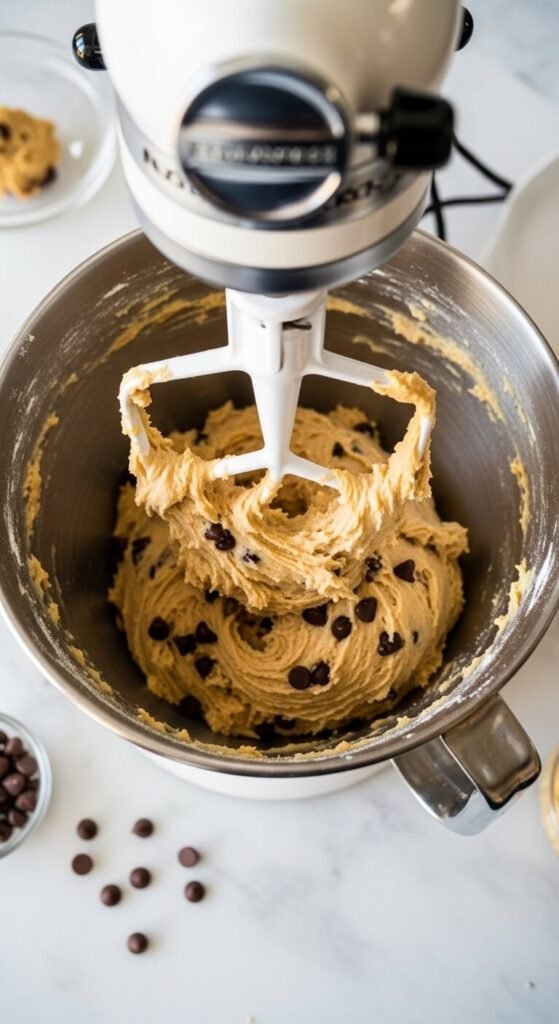
- Beat the softened butter, brown sugar, and white sugar together in a large bowl using a hand mixer on medium speed for 2 minutes until light, fluffy, and pale in color. Don’t rush this step — proper creaming creates the slightly airy texture that makes this dough feel exactly like the real thing.
- Add the vanilla and salt and beat for another 30 seconds.
- Add the heat-treated, cooled flour and mix on low speed until just combined. The mixture will look crumbly and dry at this stage — that’s normal.
- Add milk one tablespoon at a time, mixing between each addition, until the dough comes together into a soft, cohesive consistency that holds its shape when pressed. Most batches need 2 tablespoons. Add a third only if the dough still looks crumbly after the second.
- Fold in the mini chocolate chips with a rubber spatula until evenly distributed.
Texture Troubleshooting
Dough is too crumbly: Add milk half a tablespoon at a time until it comes together. Different brands of flour absorb moisture differently — some batches simply need a little more liquid.
Dough is too sticky or wet: Add one tablespoon of heat-treated flour and mix until incorporated. Repeat if needed.
Dough tastes flat: Salt is almost always the answer. Add a pinch more and mix — then taste again. Brown sugar quality also matters here — fresh, soft brown sugar produces significantly better flavor than old, hardened brown sugar.
Butter flavor is too prominent: The butter wasn’t fully creamed. Beat for an additional minute on medium-high speed to fully incorporate the fat into the sugar structure.
Ways to Serve and Use Edible Cookie Dough
The obvious application is eating it directly from the bowl with a spoon — which is completely valid and requires no further instruction. But edible cookie dough is also genuinely useful as a component in other desserts:
- Cookie dough dip: Thin slightly with an extra tablespoon of milk and serve with graham crackers, pretzels, and apple slices for a party dip that disappears within minutes
- Cookie dough truffles: Roll into 1-inch balls, freeze for 30 minutes, then dip in melted dark chocolate — refrigerate until set
- Cookie dough ice cream topping: Drop small spoonfuls over vanilla ice cream directly from the fridge
- Cookie dough bars: Press into a parchment-lined 8×8 pan, top with melted chocolate, refrigerate until firm, and cut into bars
- Cookie dough stuffed brownies: Press a thin layer of chilled dough between two layers of brownie batter before baking
Storage That Keeps It Fresh
- Refrigerator: Store in an airtight container for up to 1 week — the dough firms up when cold, so let it sit at room temperature for 10 minutes before eating for the best texture
- Freezer: Roll into balls and freeze on a parchment-lined tray, then transfer to a labeled freezer bag — keeps for up to 3 months and can be eaten straight from frozen as a firm, cold treat or thawed in the fridge overnight
Save This Recipe — Safe Cookie Dough Is a Life Upgrade
Raw cookie dough that you can eat without any concern, at any time, straight from the fridge, shared with anyone including kids — is simply a better situation than the alternative. Heat-treat the flour, skip the eggs, and you have the exact flavor you’ve been sneaking bites of for your entire life, now available in unlimited, guilt-free quantities.
Pin this recipe right now and make your first batch tonight — it takes 15 minutes, requires no baking, and solves the greatest cookie-related problem most kitchens have.