No-bake cookies have a reputation problem. Anyone who’s made them more than twice has experienced the heartbreak — a batch that never sets and stays a sticky, fudgy puddle on the parchment paper. Or the opposite: a crumbly, dry brick that falls apart the moment you pick it up. The maddening part? The recipe looks so simple. Butter, sugar, oats, cocoa, peanut butter. Five ingredients. Ten minutes. What could possibly go wrong?
Everything, apparently. Until you understand the one thing that determines whether your batch succeeds or fails completely.
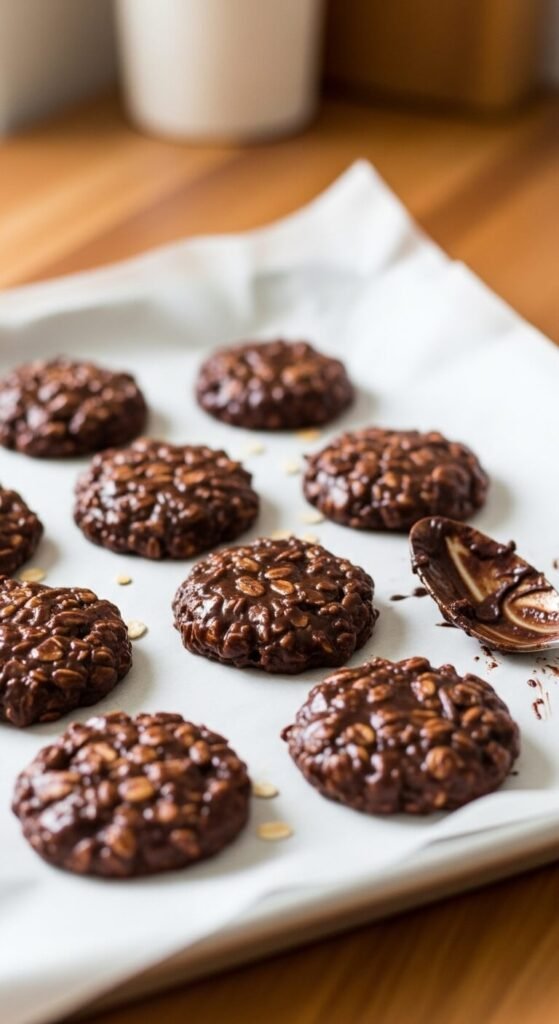
That one thing is the boil. Get it right and your cookies set perfectly every time. Get it wrong — even by 30 seconds — and you’re either eating pudding off a baking sheet or scraping dense hockey pucks into the trash. This guide will walk you through exactly what to do, when to stop, and how to fix the mistakes before they happen.
The Ingredients You Need
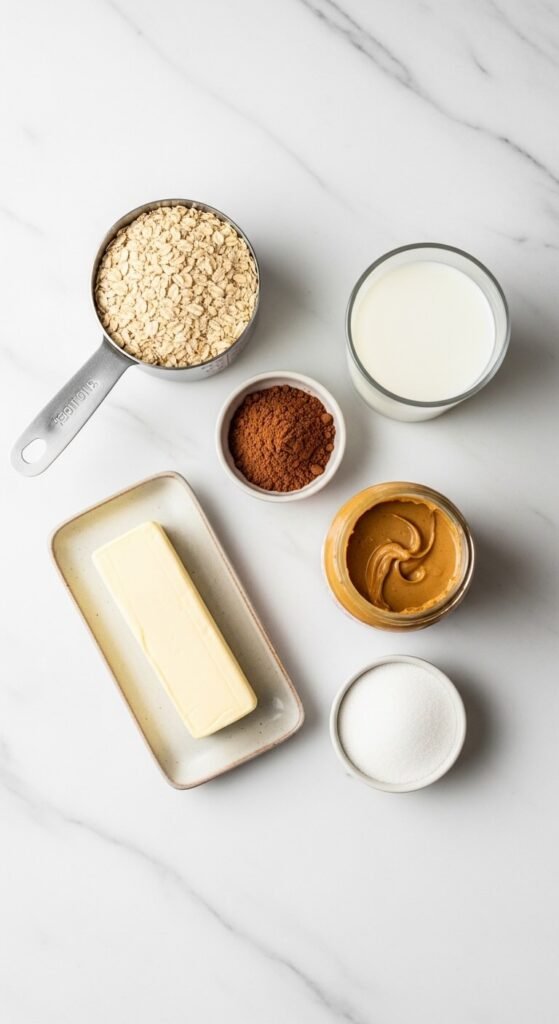
The classic no-bake cookie recipe hasn’t changed much in 70 years — and for good reason. It works. Here’s what you’ll need for approximately 36 cookies:
- 2 cups granulated sugar
- ½ cup whole milk
- ½ cup unsalted butter (1 stick)
- ¼ cup unsweetened cocoa powder
- 1 teaspoon pure vanilla extract
- ½ teaspoon salt
- 3 cups old-fashioned rolled oats
- ½ cup creamy peanut butter
A few ingredient notes that actually matter:
- Use old-fashioned rolled oats, not quick oats and definitely not instant. Quick oats absorb differently and create a mushy, indistinct texture. Rolled oats give the cookies their characteristic chew and structure.
- Whole milk only. Skim or low-fat milk changes the fat ratio in the cooked mixture and affects how the cookies set.
- Creamy peanut butter — the standard, shelf-stable kind. Natural peanut butter with separated oil can throw off the consistency.
- Measure your oats before you start cooking. Once the boiling process begins, you won’t have time to measure anything.
The Boiling Step — This Is Everything
Set up your workspace before you turn on the heat. Line two baking sheets with parchment paper. Have your oats and peanut butter measured and sitting right beside the stove. Have a tablespoon cookie scoop ready. This process moves fast once it starts.
Here’s the exact method:
- Combine sugar, milk, butter, cocoa powder, and salt in a medium saucepan over medium heat. Stir constantly while the butter melts and the mixture comes together.
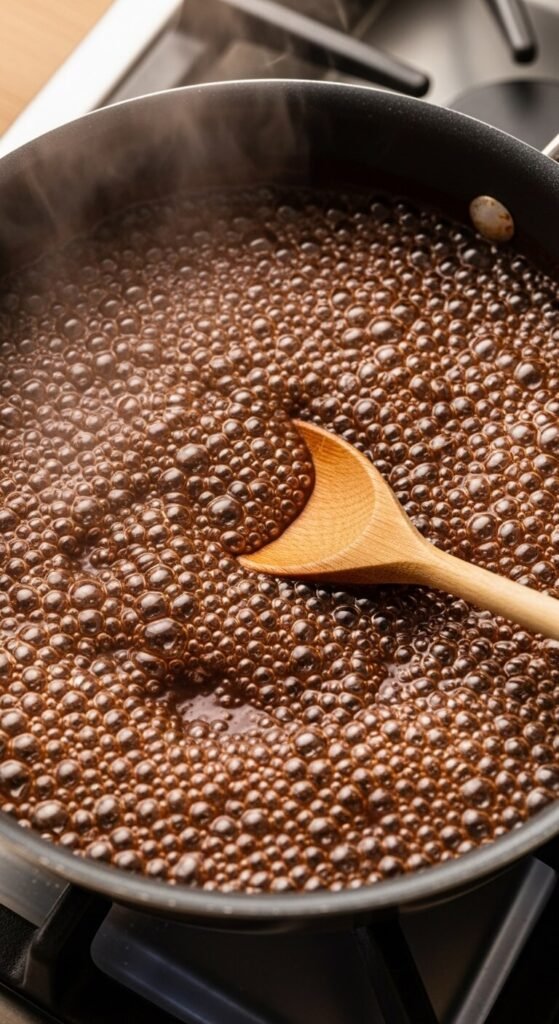
- Bring to a full rolling boil. This means a boil that doesn’t stop when you stir it — not just a few bubbles around the edges. This distinction matters enormously.
- Once it reaches a full boil, set a timer for exactly 60 seconds and keep stirring. Do not guess. Do not estimate. Use a timer.
- Remove from heat immediately when the timer goes off.
- Stir in vanilla, peanut butter, and oats quickly until everything is fully combined and coated.
Why 60 Seconds Is the Magic Number
The boiling time is essentially a simplified version of the candy-making process. You’re cooking the sugar syrup to the soft ball stage — approximately 235°F to 240°F — which is the temperature at which the cookies will set to a fudgy, sliceable consistency at room temperature.
- Under-boiled (less than 60 seconds): The sugar never reaches the right temperature. The cookies will be sticky, soft, and won’t hold their shape.
- Over-boiled (more than 75 to 90 seconds): The sugar gets too far into the hard ball stage. The cookies will be dry, grainy, and crumbly.
If you want absolute certainty, use a candy thermometer and pull the mixture off the heat the moment it hits 235°F. But the 60-second rolling boil method is reliable enough for most kitchens and most stoves.
Drop and Cool — Don’t Touch Them
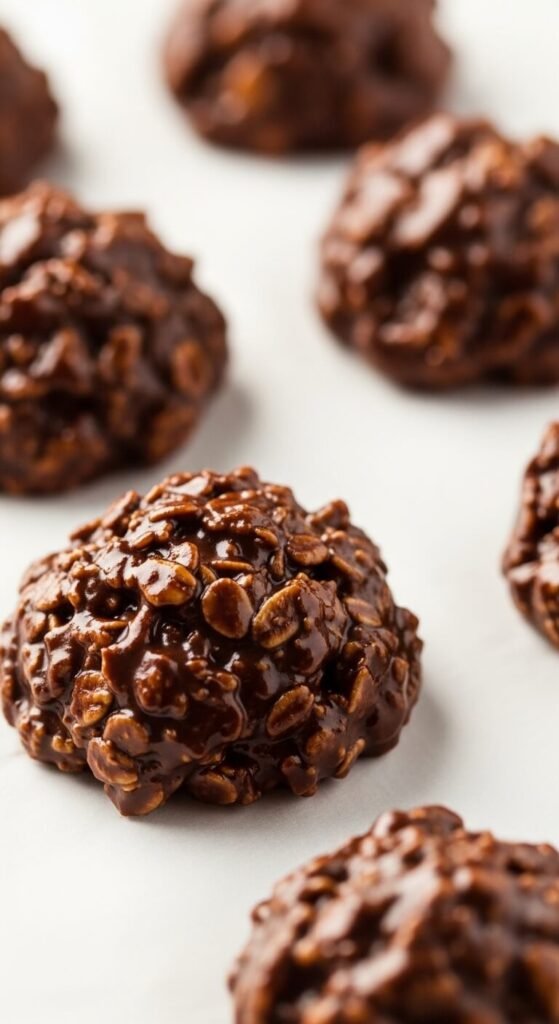
Working quickly — the mixture starts setting almost immediately — use a tablespoon-sized cookie scoop to drop rounded portions onto the prepared parchment paper.
Space them about 2 inches apart. They won’t spread, but you need room to remove them once set.
Leave them completely undisturbed for 30 to 45 minutes at room temperature. Don’t move them. Don’t poke them. Don’t put them in the fridge to speed things up — rapid chilling can cause them to set unevenly and develop a grainy sugar texture on the outside.
They’re ready when they hold their shape cleanly when lifted from the parchment.
Troubleshooting Common Problems
Cookies won’t set after an hour: The mixture was under-boiled. Return the entire batch to the saucepan, reheat to a full boil, boil for 60 seconds again, and re-drop. It works.
Cookies are dry and crumbly: Over-boiled. Add a tablespoon of milk to the mixture next time, or pull slightly earlier. Crumbly cookies still taste great pressed into a glass of cold milk.
Cookies look grainy or sugary on the outside: The sugar likely crystallized during cooking. This happens when the sides of the pan aren’t stirred down properly. Keep the mixture moving and use a pastry brush dipped in water to brush any sugar crystals off the inside of the pan walls before boiling.
Variations Worth Trying
Once you’ve mastered the base recipe, the variations are easy:
- Coconut no-bake cookies — replace ½ cup of oats with sweetened shredded coconut
- Sunflower butter version — swap peanut butter for sunflower seed butter for a nut-free option
- Espresso no-bake cookies — add 1 teaspoon of instant espresso powder to the saucepan with the cocoa
Save This Recipe — Your Future Self Will Thank You
No-bake cookies are one of those recipes that looks deceptively simple right up until the moment you realize there’s actual science happening in the pot. Now that you know what that science is — and exactly how to control it — you’ll never have a failed batch again.
Pin this article, save it to your recipe folder, or send it to the person in your life who has given up on no-bakes entirely. Perfect cookies are one 60-second boil away.