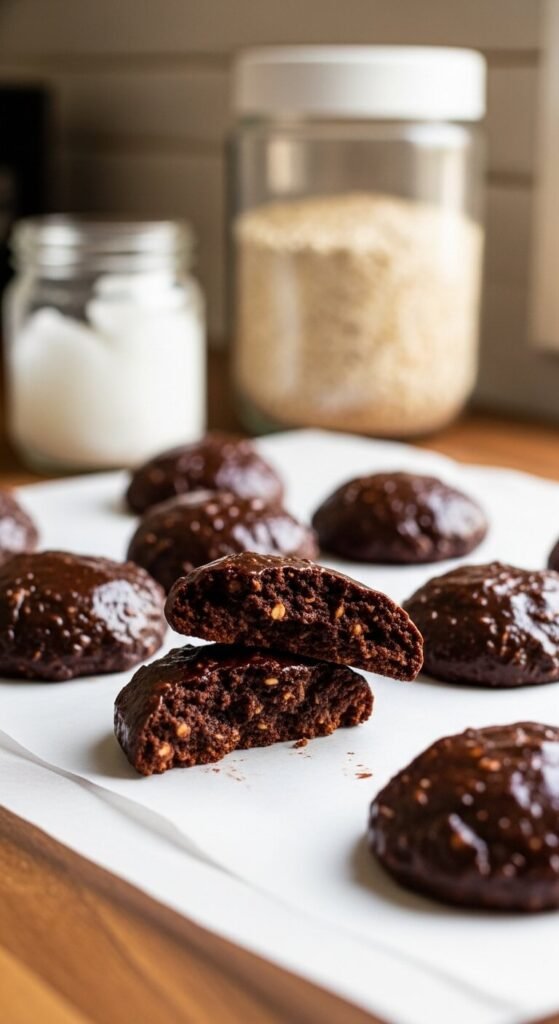
The classic no-bake cookie recipe has exactly one ingredient that excludes a significant portion of people who would otherwise love making them: butter. Whether you’re dairy-free by necessity — lactose intolerance, a milk allergy, a vegan lifestyle — or simply out of butter on a Tuesday afternoon when the cookie craving hits hardest, the good news is that butter is one of the most replaceable ingredients in the entire no-bake cookie formula. The finished cookies taste just as rich, set just as reliably, and have the same fudgy, chocolatey, peanut butter depth that makes the original recipe worth making in the first place. The only thing missing is the dairy — and genuinely, nobody will notice.
Understanding What Butter Actually Does in No-Bake Cookies
Before choosing a substitute, it helps to understand why butter is in the recipe at all — because it does three distinct things simultaneously, and the best replacement handles all three.
Butter contributes:
- Fat — which creates richness, flavor depth, and that satisfying mouthfeel
- A binding agent — which helps the sugar syrup and dry ingredients cohere into a cookie that holds its shape
- Flavor — the distinctive dairy richness that rounds out the chocolate and peanut butter
A successful dairy-free substitute needs to provide comparable fat content and neutral-to-complementary flavor. The good news is that several widely available options do exactly this.
The Best Butter Substitutes — and How Each One Performs
Coconut oil — the top recommendation. Refined coconut oil is the closest functional match to butter in this recipe. It has a comparable fat content, melts at a similar temperature, solidifies when cold, and has a completely neutral flavor in its refined form. Use it in a 1:1 ratio — if the recipe calls for ½ cup butter, use ½ cup refined coconut oil.
Unrefined virgin coconut oil works equally well but adds a noticeable coconut flavor to the finished cookie. This is genuinely delicious if you like coconut. If you don’t, use refined.
Vegan butter — the most seamless swap. Brands like Earth Balance, Miyoko’s, and Country Crock Plant Butter are formulated to behave identically to dairy butter in cooking applications. Use in a 1:1 ratio with zero recipe adjustments. The finished cookies are indistinguishable from the dairy version. This is the right choice if you want the most familiar result with the least experimentation.
Coconut cream — for a softer, richer cookie. Solid coconut cream scooped from the top of a refrigerated full-fat coconut milk can works as a butter substitute but produces a slightly softer cookie that takes longer to set and needs refrigerator storage rather than room temperature setting. Use ½ cup of solid coconut cream in place of ½ cup butter. Add 2 extra minutes to the chilling time.
The Complete Dairy-Free Recipe
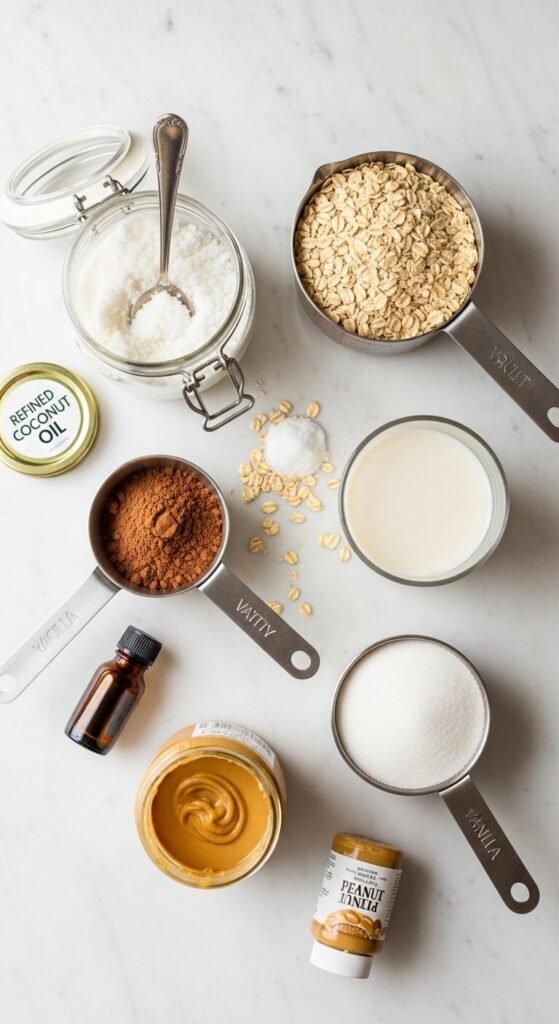
Ingredients for approximately 30 cookies:
- 2 cups granulated sugar
- ½ cup oat milk, almond milk, or full-fat coconut milk
- ½ cup refined coconut oil or vegan butter
- ¼ cup unsweetened cocoa powder, sifted
- ½ teaspoon salt
- 1 teaspoon pure vanilla extract
- ½ cup creamy peanut butter — standard shelf-stable
- 3 cups old-fashioned rolled oats
On the milk substitute: The milk in this recipe contributes moisture and helps the sugar dissolve evenly. Oat milk and almond milk both work well — they have a neutral flavor and behave similarly to whole dairy milk in a heated sugar application. Full-fat coconut milk adds a subtle richness and slight coconut note. Avoid low-fat or watered-down milk substitutes — the reduced fat content changes how the sugar syrup behaves during boiling.
The Method — Same Technique, Different Fat
The dairy-free version follows exactly the same technique as the original — because the technique is about the sugar, and the sugar hasn’t changed.
Step 1: Combine sugar, milk substitute, coconut oil, cocoa powder, and salt in a medium heavy-bottomed saucepan over medium heat. Stir continuously as the coconut oil melts and the sugar begins to dissolve.
Step 2: As the mixture heats, use a damp pastry brush to wash down any sugar crystals from the inside walls of the pan — this prevents graininess in the finished cookie.
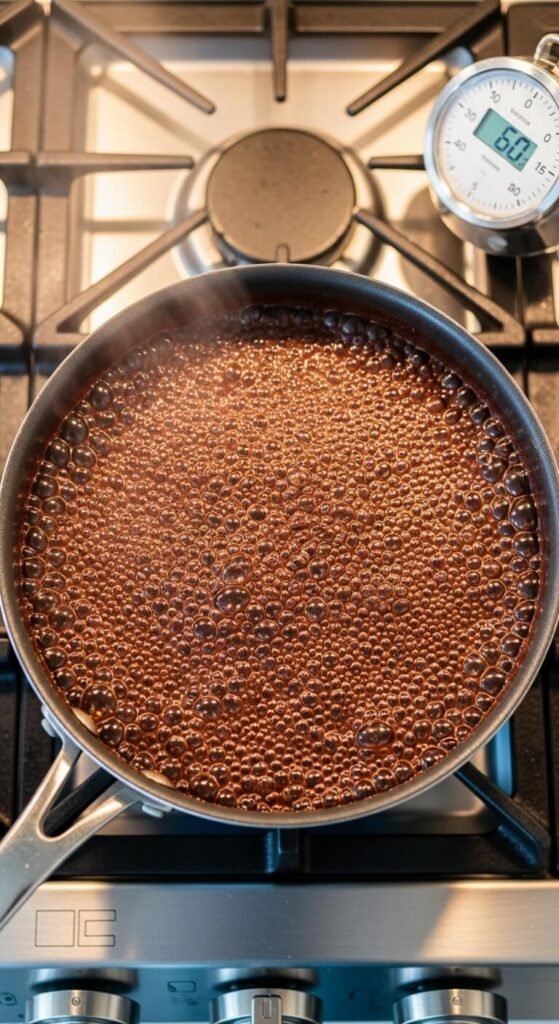
Step 3: Bring to a full rolling boil — vigorous bubbles across the entire surface that don’t stop when you stir. Stop stirring at this point.
Step 4: Set a timer for exactly 60 seconds and let the mixture boil undisturbed. The coconut oil boils at a slightly different visual appearance than butter — the mixture may look slightly more separated during the boil, which is normal and resolves completely once the oats are added.
Step 5: Remove from heat immediately and stir in vanilla, peanut butter, and oats using a clean spatula. Work quickly — coconut oil sets faster than butter in cooler kitchens.
Dropping and Setting — One Key Difference
Drop cookies onto parchment-lined baking sheets immediately after mixing. Work faster than you would with a butter-based recipe — coconut oil has a lower melting point than butter and starts to set more quickly at room temperature, especially in cool kitchens. If your kitchen is below 68°F, have your cookie scoops ready before you even start cooking.
Setting time with coconut oil: At room temperature above 75°F, coconut oil stays softer longer and cookies may need refrigerator setting for 15 to 20 minutes rather than room temperature setting. In cooler rooms, they’ll set normally within 30 minutes.
If cookies aren’t setting after 45 minutes at room temperature: Transfer the baking sheet to the refrigerator for 20 minutes. Coconut oil is temperature-sensitive in a way butter isn’t — cold accelerates the set reliably.
Storing Dairy-Free No-Bake Cookies
This is where the coconut oil substitution requires one specific adjustment.
Store in the refrigerator, not at room temperature. Coconut oil softens significantly at temperatures above 76°F — which means on a warm day or in a warm kitchen, room-temperature-stored cookies made with coconut oil become soft and sticky rather than holding their shape.
- Refrigerator: Airtight container with parchment between layers — up to 2 weeks, texture improves after day one
- Freezer: Freeze in a single layer first, then transfer to a labeled bag — up to 2 months
- Serving: Remove from the refrigerator 10 minutes before eating for the best texture — cold coconut oil can make them slightly firmer than the butter version straight from the fridge
Save This Recipe — Dairy-Free Baking Just Got Easier
No-bake cookies without butter are not a compromise version of the real thing. They’re the same recipe with a different fat — and when that fat is refined coconut oil or quality vegan butter, the finished cookie delivers everything the original promises: rich chocolate flavor, satisfying chew, and the fudgy, oat-studded interior that makes no-bake cookies worth making in the first place.
Pin this recipe to your dairy-free or no-bake desserts board right now — and the next time someone with a dairy restriction asks if there’s anything they can eat, this is the answer you pull out.