There are very few foods that can legitimately appear on both ends of the day and be completely at home in each context. A parfait is one of them. Built beautifully in a clear glass, layered with creamy yogurt or whipped cream, jewel-bright fruit, and something crunchy in between, a parfait is simultaneously a weekday breakfast that feels like a treat and a dinner party dessert that looks like it came from a restaurant. No cooking, no blending, no baking. Just assembly — thoughtful, quick, and deeply satisfying from the very first spoonful. Here’s how to make one that works beautifully in both directions.
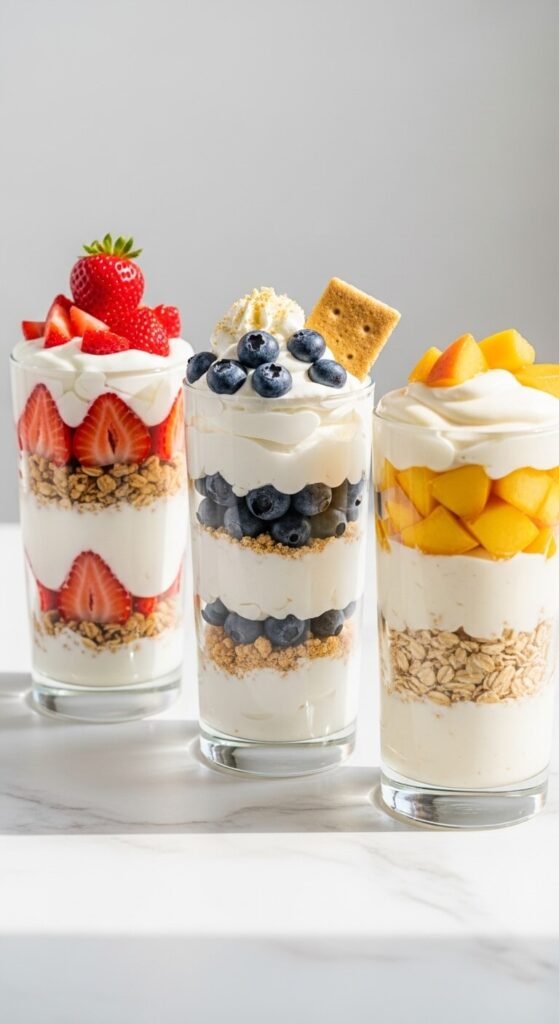
Understand the Three-Layer Foundation
Every great parfait — breakfast or dessert — is built on the same fundamental structure. Understanding these three layers means you can make a parfait from whatever you have on hand, in whatever combination fits the moment.
The cream layer: This is the richest, smoothest element — the thing that makes the parfait feel indulgent and satisfying. For breakfast, this is usually Greek yogurt or regular yogurt. For dessert, it’s whipped cream, mascarpone, or a lightened cream cheese mixture. The cream layer carries the flavor and provides the smooth contrast to everything crunchy and fruity around it.
The crunch layer: Texture is what separates a parfait from a smoothie bowl. The crunch layer — granola, crushed cookies, toasted oats, graham crackers, or crushed cereal — provides contrast, absorbs a small amount of moisture from the cream, and softens just enough over time to become something better than either element would be alone.
The fruit layer: Fresh, roasted, or macerated fruit brings brightness, color, and natural sweetness that ties the cream and crunch together. Berries are the classic choice, but sliced peaches, mango cubes, roasted plums, or even a good fruit compote all work beautifully.
Layer them in this order: cream — crunch — fruit — cream — crunch — fruit, ending with the most visually striking elements on top. The more visible layers, the more stunning the result.
The Breakfast Parfait
A breakfast parfait needs to deliver on two fronts: it should feel like a treat (so you actually want to eat it at 7am) and provide enough protein and substance to actually sustain you through the morning.
The formula that works:
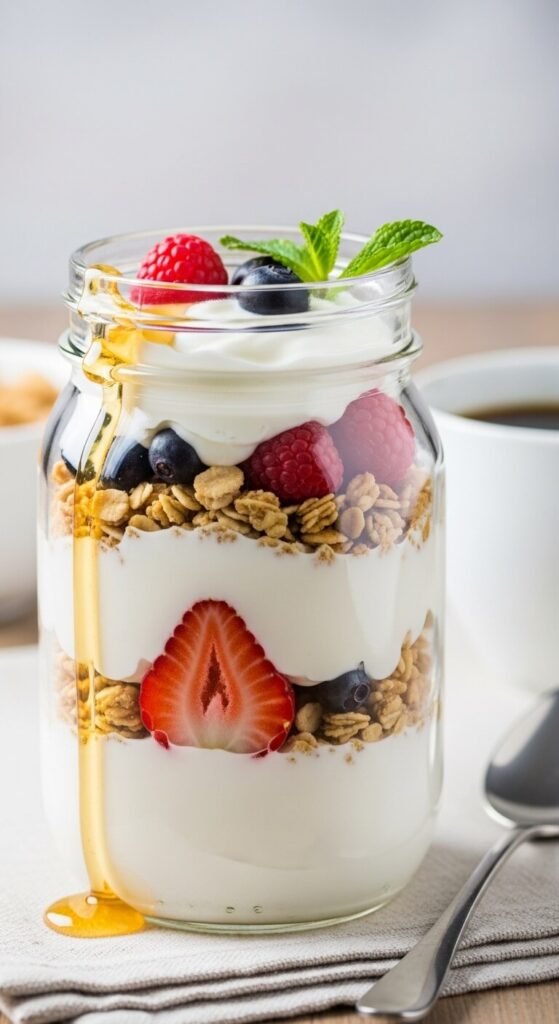
- Base cream: Full-fat Greek yogurt, sweetened with a drizzle of honey and a splash of vanilla extract. The full-fat version has a richer flavor and a thicker, more stable consistency that holds layers cleanly.
- Crunch: Granola — homemade or store-bought. Look for a granola with clusters rather than loose oats, so the pieces stay distinct in the parfait.
- Fruit: Whatever is ripest and most vibrant. Strawberries and blueberries together are the classic combination. Sliced banana with honey gives a tropical sweetness. Roasted peaches with a pinch of cinnamon feel like something special.
Making it more filling:
- Stir a tablespoon of chia seeds or ground flaxseed into the yogurt layer before assembling — they add fiber and healthy fats without changing the flavor
- Use a granola with nuts and seeds rather than a plain oat variety for longer-lasting energy
- Add a layer of nut butter — a thin spread between the yogurt and granola layers is a revelation that very few people try and everyone loves once they do
Meal prep tip: Assemble the yogurt and fruit layers in mason jars the night before and refrigerate. Add the granola right before eating so it stays crunchy rather than turning soggy overnight.
The Dessert Parfait
The dessert parfait is where you get to be slightly more indulgent. The cream layer gets richer, the crunch gets more interesting, and the whole thing is served with a little more ceremony.
The formula that works:
- Base cream: Freshly whipped cream sweetened with powdered sugar and vanilla — or a mixture of whipped cream and mascarpone for extra richness and a slight tang that elevates the whole parfait. Either one should be whipped to stiff peaks so the layers hold their shape in the glass.
- Crunch: Crushed shortbread cookies, Oreo crumbles, graham cracker pieces, or toasted slivered almonds. The crunch layer in a dessert parfait should be slightly richer and more indulgent than granola — it’s dessert, after all.
- Fruit: This is where you can be more creative. A warm berry compote poured slightly cooled into the glass creates a beautiful marbled effect. Macerated strawberries (sliced, sugared, and left to sit for 30 minutes so they release their ruby juice) are extraordinary. A layer of lemon curd between the whipped cream and fresh blueberries is one of the most sophisticated parfait moments in existence.
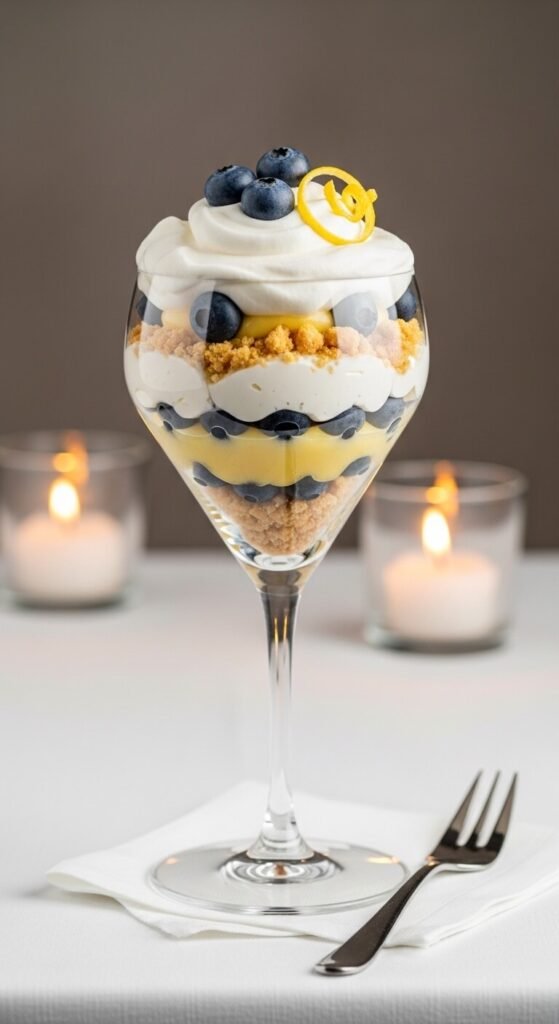
Serving ideas that elevate the dessert parfait:
- Use wine glasses or champagne coupes instead of regular glasses — the stem and the wide bowl make even a simple parfait look elegant
- Serve immediately after assembling rather than making ahead — the contrast between cold cream and crisp crunch is best at its freshest
- Finish with a light dusting of cocoa powder, a drizzle of caramel or chocolate sauce, or a single whole berry placed with intention on top
Five Flavor Combinations for Both Occasions
Once you know the formula, these combinations snap into place immediately:
Breakfast:
- Honey Almond Berry — vanilla Greek yogurt + almond granola + mixed berries + honey drizzle
- Tropical Morning — coconut Greek yogurt + macadamia granola + mango and pineapple + toasted coconut
Dessert:
- Strawberry Shortcake — vanilla whipped cream + crushed shortbread + macerated strawberries
- Chocolate Raspberry — chocolate whipped cream (add 1 tablespoon cocoa powder to the cream before whipping) + crushed Oreos + fresh raspberries
- Peach Cobbler — vanilla mascarpone cream + graham cracker crumbles + cinnamon-roasted peaches
Tips for Parfaits That Look as Good as They Taste
- Use clear glasses every time — the whole point of a parfait is the visible layers. An opaque bowl defeats the purpose entirely.
- Keep each layer distinct — don’t let cream bleed into the fruit layer before the crunch goes in. Add each layer carefully.
- Angle the glass slightly when adding layers — tilting gives each element a slightly wider visual surface against the glass wall.
- Less is more on quantity per layer — thin, distinct layers look more impressive than thick, muddled ones.
The Takeaway
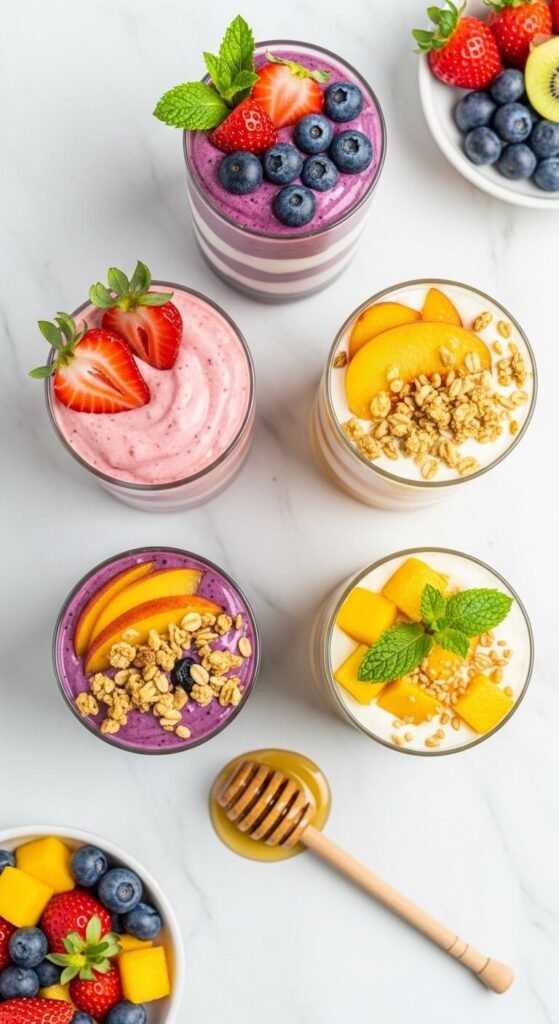
A great parfait isn’t about a specific recipe — it’s about understanding a structure and then making it your own with whatever cream, crunch, and fruit speak to you in that moment. Breakfast or dessert, morning or evening, weekday or celebration — the formula works every time.
Save this article and make a parfait tomorrow morning — and then make a different version for dessert tomorrow night. Once you have the three-layer framework in your head, you’ll never look at a container of yogurt, a bowl of fruit, or a bag of granola the same way again. 🍓🫐✨