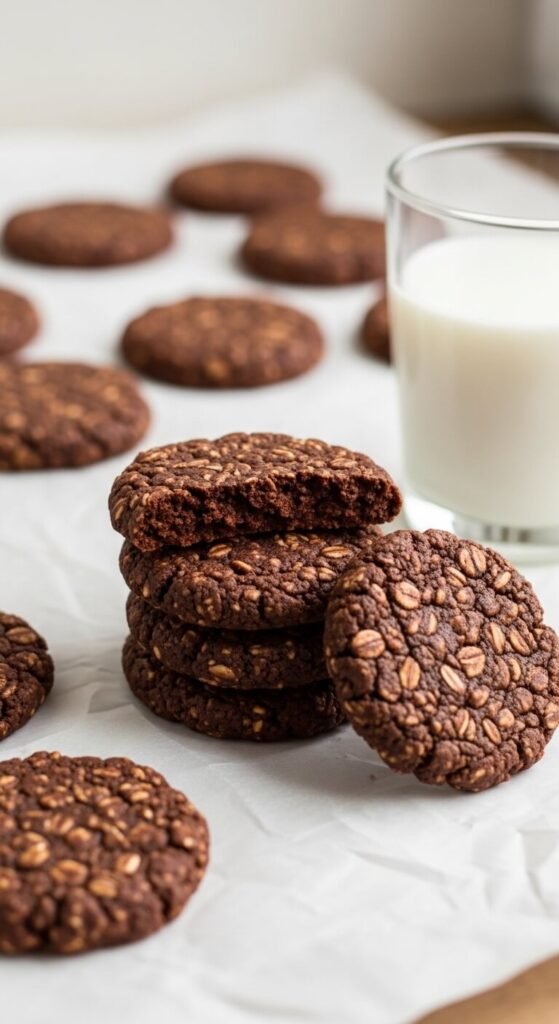
You made a batch of no-bake cookies and something went wrong. They set — which is progress, because plenty of batches never get that far — but they set too firm. They’re dense, dry, and difficult to bite through without a concerning amount of jaw effort. They taste like the cookie they were supposed to be, but the texture communicates something closer to a granola bar that had a bad day. Before you eat them all out of obligation or quietly dispose of them in the trash, know this: hard no-bake cookies are often rescuable, and even when they’re not fully salvageable as cookies, they’re completely redeemable as something else delicious. Here’s exactly what to do.
Why Your No-Bake Cookies Set Too Hard
Hard no-bake cookies are almost always caused by one of two things — and usually both working together.
Over-boiling the sugar mixture. The 60-second rolling boil that most recipes specify is not an approximation. It’s a calibrated cooking target. Every additional second past 60 drives the sugar syrup further into the hard-ball stage — past the soft, fudgy texture you want and into territory that produces a cookie with the structural integrity of a peanut brittle. Twenty extra seconds makes a noticeable difference. Forty extra seconds makes a significant one.
Too little fat or moisture. Butter and peanut butter are what keep no-bake cookies from setting to a rock-hard consistency. A recipe that’s short on either — or that uses a dry, low-oil peanut butter — produces cookies that set hard regardless of how accurately the boil was timed.
Low humidity environments can also accelerate hardening in already-finished cookies. Dry air pulls moisture out of the oats and sugar mixture faster than a humid kitchen would, leaving cookies that were borderline acceptable on day one completely unpleasant by day two.
Fix 1 — The Bread Slice Method for Already-Set Cookies
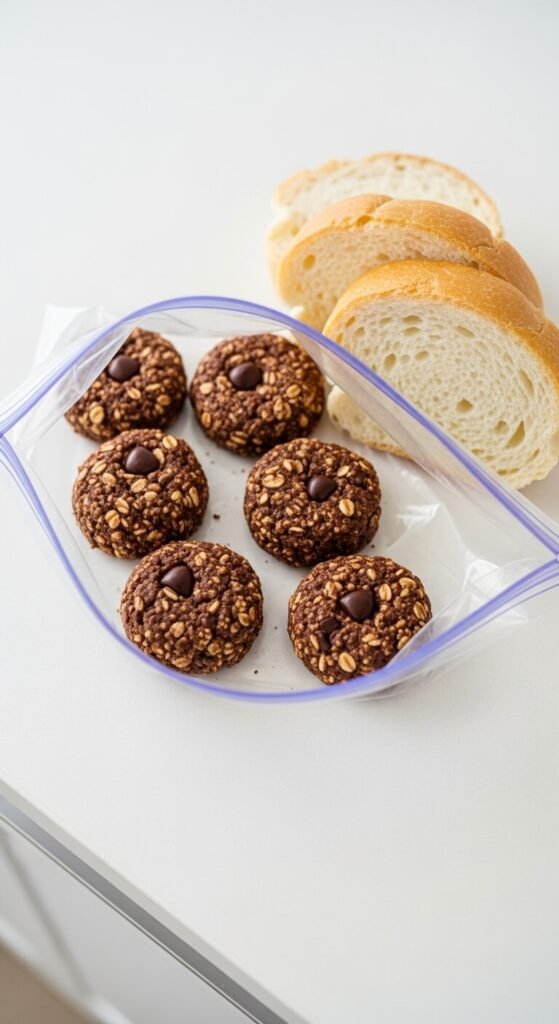
This is the gentlest intervention for cookies that are already sitting on the counter or stored in a container — and it works surprisingly well for cookies that are hard but not completely desiccated.
What to do:
- Place the hard cookies in an airtight container or a zip-lock bag
- Add one or two slices of fresh white bread to the container alongside the cookies
- Seal completely and leave at room temperature for 8 to 12 hours
The bread releases ambient moisture into the sealed container. The cookies absorb that moisture through the oats and sugar structure and soften noticeably. This is the same principle used to soften hard baked cookies — and it works just as effectively on no-bake versions.
The cookies won’t become as soft as a perfectly made batch, but they’ll go from unpleasantly hard to genuinely enjoyable. Replace the bread slice after 24 hours if you want to continue the softening process.
Fix 2 — Steam Softening for Immediate Results
If you need softer cookies faster than the bread method allows, gentle steam exposure works in minutes rather than hours.
What to do:
- Place hard cookies on a microwave-safe plate
- Set a small microwave-safe cup of water beside the plate in the microwave
- Microwave on 50% power for 10 seconds
- Check the texture — if still too firm, repeat once more at 10 seconds
- Let rest for 2 minutes before eating — the texture continues to improve as the absorbed steam distributes through the cookie
Important: Don’t microwave without the water cup and don’t use full power. Direct high-heat microwaving without moisture makes hard cookies harder — the residual sugar in the cookie continues cooking and dries out further. The water creates steam that softens from the outside in.
This method works best for cookies you’re eating immediately — steam-softened cookies don’t store as well as fresh ones and tend to firm back up within a few hours.
Fix 3 — Crumble and Repurpose
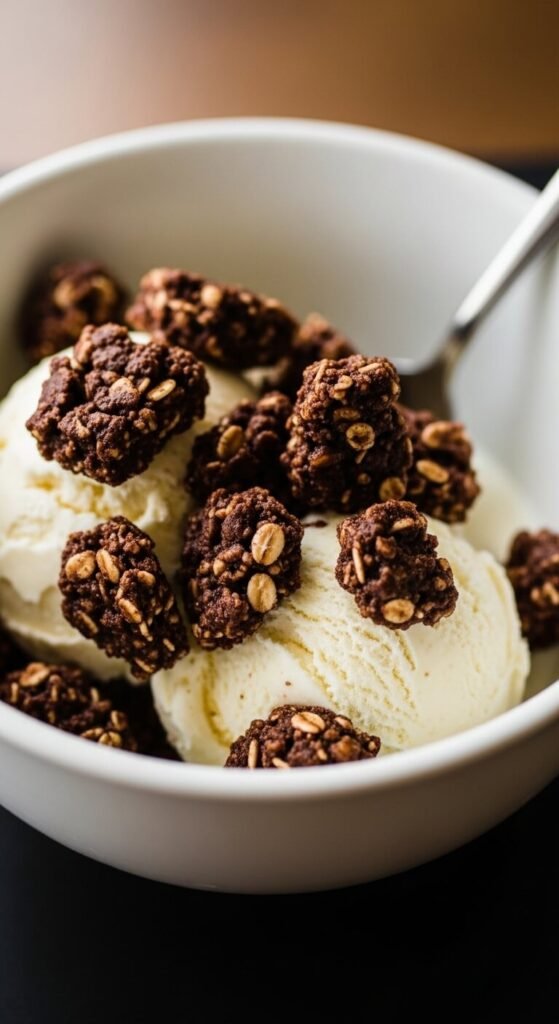
When the cookies are genuinely too hard to rescue as cookies — the kind where eating one risks a dental incident — repurposing is the most practical solution. Hard no-bake cookies crumble beautifully and the resulting crumble is both delicious and useful.
Ways to use crumbled hard no-bake cookies:
- Ice cream topping: The chocolate-peanut butter-oat crumble is genuinely extraordinary over vanilla ice cream — better than any store-bought ice cream topping you’ve had
- Parfait layer: Crumble between layers of whipped cream and fresh banana slices in individual glasses for a no-effort dessert that looks intentional
- Yogurt mix-in: Stir crumbles into thick Greek yogurt with a drizzle of honey for a breakfast that tastes like dessert
- No-bake pie crust: Press crumbled hard cookies firmly into a pie dish with 2 tablespoons of melted butter for an instant, deeply flavored crust for a chocolate or peanut butter no-bake pie
How to Prevent Hard Cookies Next Time
Understanding why they went wrong is the most useful thing you can take from a failed batch. Here’s what to adjust:
If you over-boiled: Set a dedicated kitchen timer the moment the mixture hits a full rolling boil — not when it starts to bubble, not when it starts to look like it might boil. A full rolling boil means vigorous bubbles across the entire surface that don’t stop when you stir. Start the timer at that exact moment and pull the pan at 60 seconds without hesitation.
If the recipe was short on fat:
- Add an extra tablespoon of butter to the saucepan next time
- Use a creamy commercial peanut butter — Jif or Skippy — rather than natural peanut butter, which has variable oil content that affects the final texture
- Add one tablespoon of light corn syrup to the mixture before boiling — corn syrup keeps the finished cookie softer by interfering with sugar crystallization and retaining moisture
If your kitchen environment is dry: Store finished cookies in an airtight container immediately — not loosely covered or left on the counter. The container traps ambient moisture and prevents the cookies from losing what little softness they had.
The Texture Test That Catches Problems Before They Happen
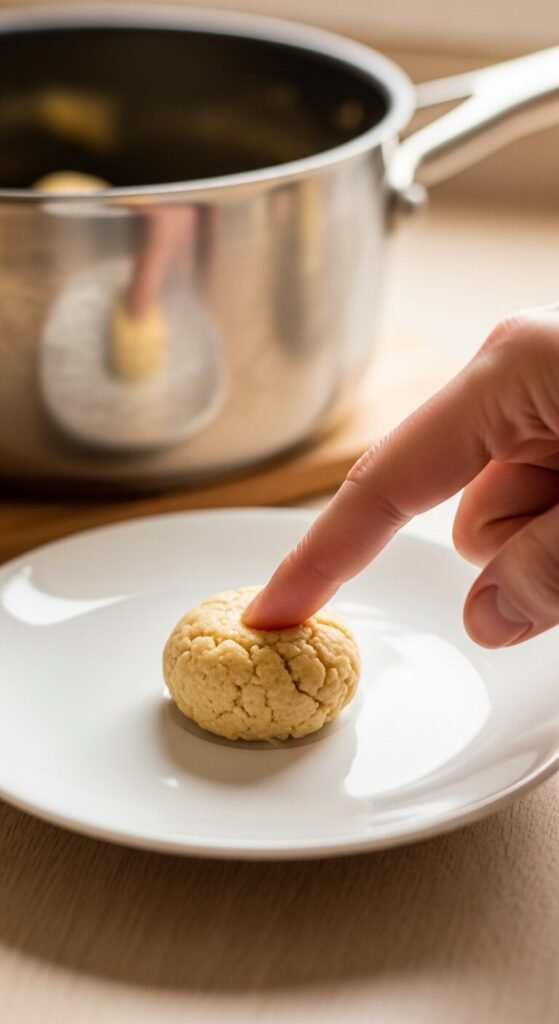
Before dropping cookies onto parchment — while the mixture is still in the pan — you can predict how they’ll set with a quick test.
Drop a small spoonful onto a cold plate and wait 2 minutes. Press it gently with a finger:
- Yields slightly and springs back: Perfect. Drop the rest of the batch.
- Immediately rock hard: Over-cooked. The batch will be hard. Add a tablespoon of peanut butter and a teaspoon of milk to the pan, stir quickly over low heat for 30 seconds, and re-drop.
- Still soft and shiny after 5 minutes: Under-cooked. Return to a boil for 20 additional seconds.
Save This — Hard Cookies Are Fixable
Hard no-bake cookies are frustrating but rarely terminal. The bread method softens them overnight. Steam softening works in minutes. And when neither rescue option is right for the situation, crumbling them over ice cream produces something genuinely better than the original cookie was ever going to be.
Save this article to your baking troubleshooting board — and next time a batch goes wrong, you’ll know exactly what to do before the cookies even finish cooling.