You made the filling, poured it into the pan, and it looks… soupy. Not catastrophically runny — just thin. Loose. The kind of filling that makes you question whether it will ever become something sliceable or whether you’re going to be serving cheesecake soup at dinner tonight. You don’t want to throw it out and start over. You don’t have time to start over. What you want is a fix — something you can do right now, with what you have, that actually works.
Good news: thickening a no-bake cheesecake filling that’s already made is entirely possible. Several methods work reliably, most use ingredients you already have on hand, and none of them require starting from scratch. Here’s exactly what to do.
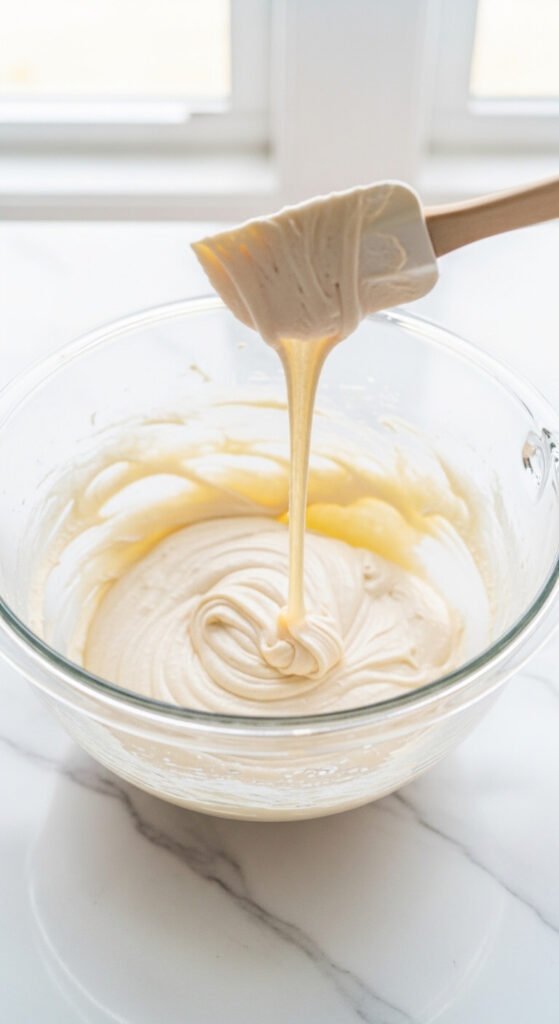
Understand Why the Filling Is Too Thin
Diagnosing the cause takes 30 seconds and determines which fix will work best for your specific situation.
The most common reasons a filling comes out too thin:
- Heavy cream wasn’t whipped to firm peaks. Under-whipped cream adds liquid volume rather than airy structure. This is the most frequent culprit.
- Cream cheese was too warm. Properly softened cream cheese should be pliable but still cool. Cream cheese that’s been out too long — or softened in the microwave — loses the structural integrity it needs to hold up the filling.
- Low-fat or spreadable cream cheese was used. The extra moisture content in reduced-fat versions and tub-style cream cheese significantly compromises filling thickness.
- Too much liquid was added. Extra lemon juice, fruit purees, or flavoring additions beyond what the recipe specified can tip the balance from thick to thin.
- Filling was over-mixed after the cream was folded in. Over-mixing deflates the whipped cream and collapses the air structure that gives the filling its body.
Fix 1 — Re-Whip the Existing Filling
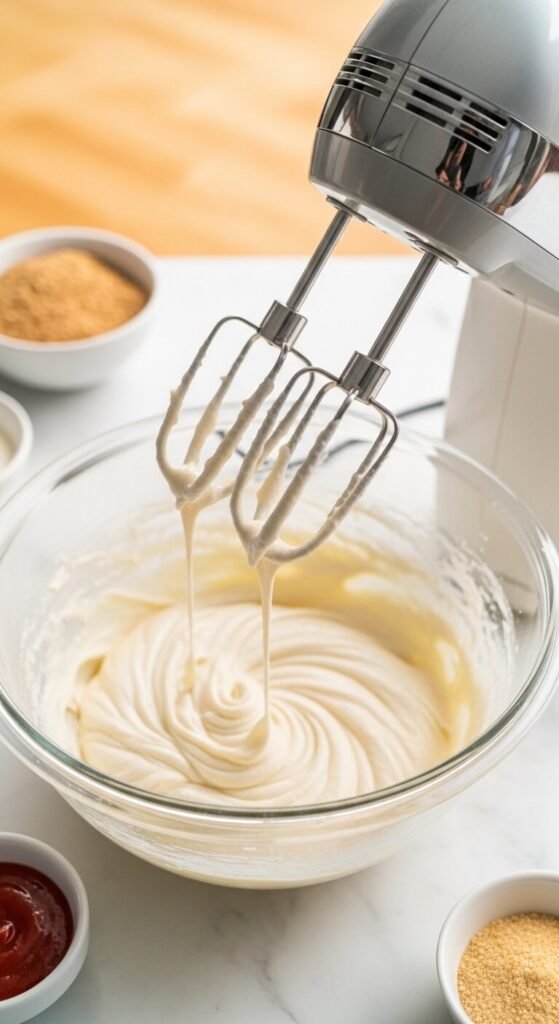
If the filling is thin because the cream was under-whipped, you can often correct it by simply beating the entire filling mixture again.
What to do:
- Pour the thin filling back into a large mixing bowl if it’s already in the pan
- Beat with a hand mixer on medium-high speed for 2 to 3 minutes
- Watch for the filling to visibly thicken and increase in volume
- Stop the moment it holds a soft ribbon when the beater is lifted — don’t over-beat
This works best when the cream cheese and cream are still cool. If the filling has been sitting at room temperature for more than 30 minutes, refrigerate the bowl for 15 minutes first to re-chill everything before re-whipping.
Fix 2 — Fold in More Whipped Cream
Adding additional properly whipped heavy cream to a thin filling introduces fresh, stable air structure and additional fat — both of which thicken the mixture without changing the flavor.
What to do:
- Pour ½ cup of cold heavy whipping cream into a chilled bowl
- Beat to firm peaks — the peaks should stand straight and hold without drooping at the tip
- Fold the freshly whipped cream into the thin filling using a rubber spatula in slow, large, sweeping motions — fold, don’t stir
- Check the consistency — it should hold a shape when dropped from the spatula rather than flowing off in a liquid stream
- Add another ¼ cup whipped cream and fold again if still too thin
This is the gentlest fix available and the one least likely to affect the flavor balance of your original recipe.
Fix 3 — Add More Cream Cheese
Cold cream cheese beaten into a thin filling adds immediate thickness through both fat content and protein structure. This is the most reliable fix when the original filling was under-measured on cream cheese or when low-fat cream cheese caused the problem.
What to do:
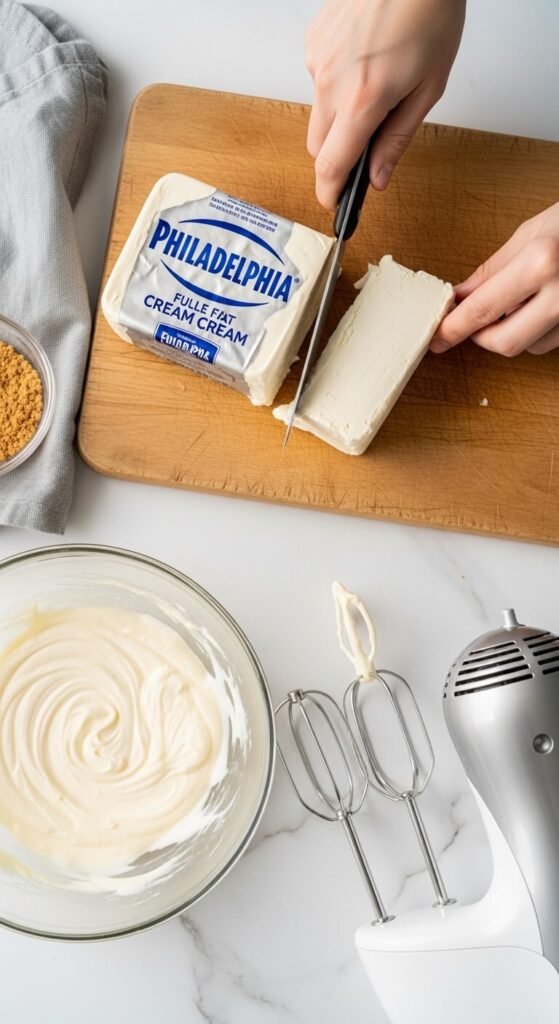
- Take 4 oz (half a block) of full-fat block cream cheese — use it cold, straight from the fridge
- Beat the cold cream cheese alone in a bowl until completely smooth — no lumps
- Add the thin filling to the beaten cream cheese in three additions, mixing on medium speed between each
- Taste and adjust sweetness with 1 tablespoon of powdered sugar if the added cream cheese makes the filling less sweet
Cold cream cheese incorporates faster than room temperature for this application because it contributes firm structure from the first moment rather than loosening the mixture further.
Fix 4 — Use Gelatin for a Guaranteed Set
When other methods haven’t produced enough thickness — or when you need absolute certainty that the cheesecake will set properly — gelatin is the definitive solution. It works regardless of what caused the original thinness.
What to do:
- Measure 1 teaspoon of unflavored powdered gelatin into a small bowl
- Add 2 tablespoons of cold water and stir — let it sit for 5 minutes to bloom
- Microwave for 10 seconds until just melted and clear
- Let the gelatin cool for 2 minutes — it should be liquid but not hot enough to cook the dairy
- Pour the cooled gelatin into the thin filling in a thin, steady stream while beating on low speed
- Increase to medium speed and beat for 1 minute until fully incorporated
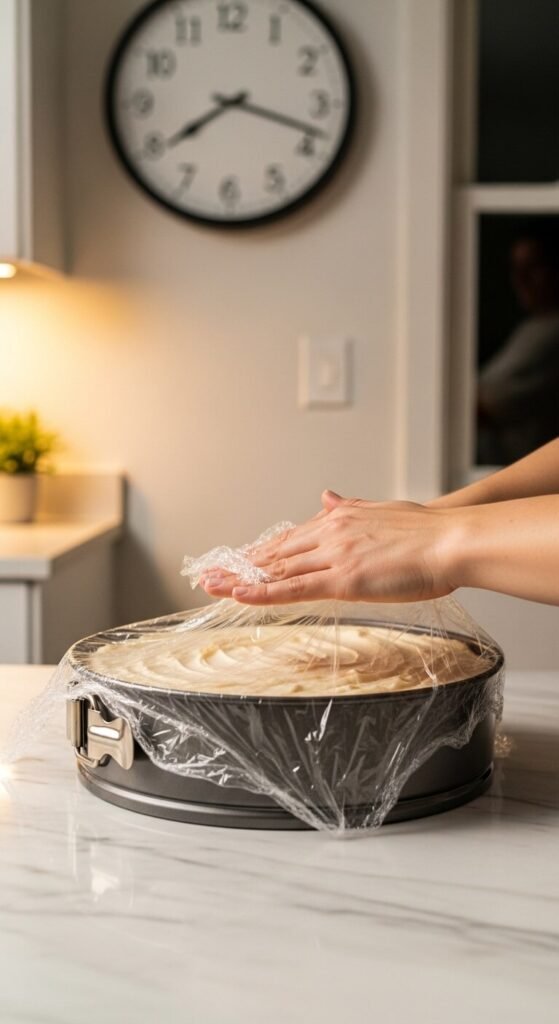
- Pour into the pan immediately and refrigerate
Gelatin-stabilized cheesecake filling sets reliably in 3 to 4 hours in the refrigerator — significantly faster than an unstabilized filling. This makes it the preferred fix when you’re working against a deadline.
Fix 5 — Chill It Before Deciding It’s Too Thin
Before adding anything to the filling, consider this: a no-bake cheesecake filling always looks considerably thinner at room temperature than it will after proper chilling.
A filling that looks loose in the bowl often sets completely firm after refrigeration — because the fats in both the cream cheese and heavy cream solidify as the temperature drops, dramatically increasing the structural integrity of the whole mixture.
If your filling holds its shape for even a few seconds when dropped from a spoon — rather than flowing immediately like water — pour it into the pan and refrigerate it for the full recommended time before deciding it needs intervention.
- Minimum chill time: 6 hours
- Recommended: overnight
- Fastest option: 60 to 90 minutes in the freezer, followed by 30 minutes in the refrigerator
Prevent Thin Filling From Happening Again
Now that this batch is rescued, a few habits eliminate the problem entirely going forward:
- Always whip heavy cream to firm, standing peaks before folding — test by lifting the beater and checking that the peak holds without drooping
- Use full-fat block cream cheese only — Philadelphia blocks, not spreadable tubs or reduced-fat versions
- Keep cream cheese cool — softened enough to beat smooth, but still cool to the touch
- Fold, don’t stir when incorporating whipped cream — stirring deflates the air structure immediately
- Chill your bowl and beaters before whipping cream — cold equipment produces better, more stable peaks
Your Cheesecake Is Going to Be Fine
A thin no-bake cheesecake filling is a solvable problem at every stage — whether it’s still in the bowl, already in the pan, or sitting in the fridge wondering if it will ever firm up. Re-whipping, additional cream cheese, fresh whipped cream, and gelatin are all reliable interventions that work with what you already have.
Save this article to your baking troubleshooting board — it’s the kind of fix you’ll want to find in thirty seconds when you need it, not thirty minutes.